What Makes a Real Garage? Feb 09, 2026
When people search for a “garage,” they often assume it’s just a shed with a roll-up door. And in some cases, that’s exactly what it is — a shed with a big door added to the front. But the door itself does not make a garage, especially not one built to last.
What truly defines a garage is how it’s built and what it’s designed to support.
At Old Glory Sheds & Outdoors, we build real garages the right way — purpose-built for vehicles, equipment, storage, and long-term use. That starts from the floor up.
The biggest difference between a shed and a true garage isn’t always obvious from the outside. It’s in the floor structure and foundation underneath. A door is optional. A strong, durable floor isn’t.
Both sheds and garages may use 2×4 floor joists, but how those joists are spaced makes all the difference. Sheds are built with joists spaced 16 inches on center, which works well for general storage. Garages, on the other hand, are built with joists spaced much tighter — typically 8 to 12 inches on center — specifically to handle vehicle weight and rolling loads. That tighter spacing creates a stronger, more rigid floor system, which is exactly what’s needed when you’re parking cars, ATVs, tractors, or heavy equipment.
Flooring material is just as important. Our sheds use 5/8" LP® SmartFloor, which is an excellent product for storage and everyday use. Our garages step up to 3/4" Advantech® tongue-and-groove flooring, chosen for its superior strength, moisture resistance, and long-term durability. A properly built floor system reduces bounce, prevents sagging, and dramatically extends the life of the structure.
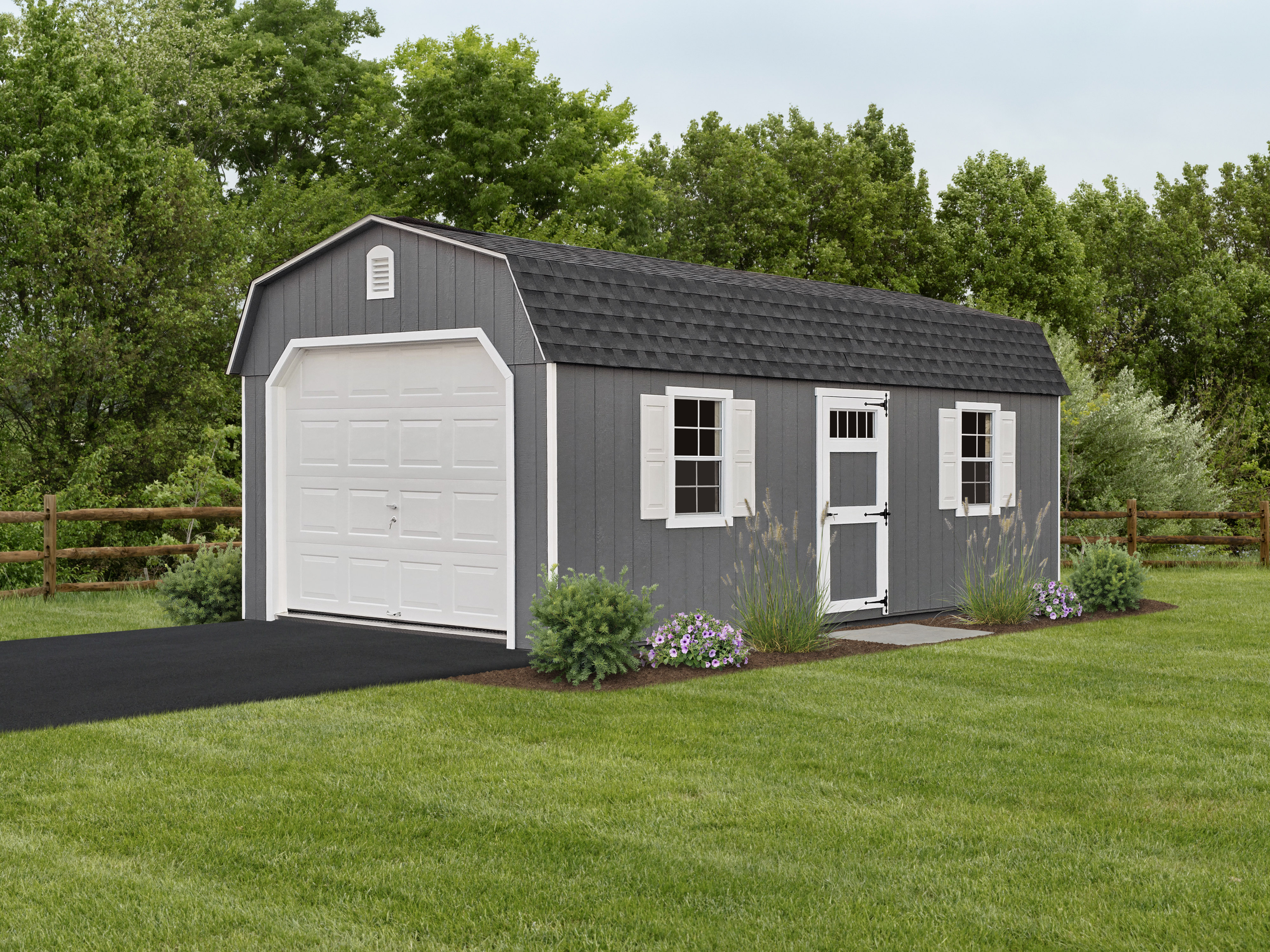
This is why simply adding an overhead door doesn’t magically turn a shed into a garage. One common industry shortcut is installing a garage door on a shed floor system and calling it a “garage.” The building may look the part, but it’s not engineered for vehicle use. At Old Glory, a true garage is built with stronger joist spacing, heavier flooring, and clear intent from day one — designed to handle repeated heavy use and rolling loads without compromise. That’s exactly how we build the garages shown on our Single & Double Wide Garage page.
Construction matters even more when you consider how people actually use their garages. If you plan to park a car, truck, or SUV, store an ATV or riding mower, set up a workshop with heavy tools, or add shelving and work benches, you already need a structure built as a garage. A floor system designed like a shed will flex, sag, and fail much sooner under those conditions, and that shortcut often leads to costly repairs or replacement down the road.
Even the strongest garage structure still depends on what’s underneath it. A proper foundation is the other half of the equation. Whether that’s a professionally prepared stone base with geotextile fabric, framing, and compacted gravel, or a concrete pad where required by code or preferred for permanence, the base matters. Uneven or unstable ground will undermine even the best-built garage. If you’re unsure what foundation makes sense for your site, we’re always happy to help evaluate it.
In the end, the right garage is the one built for how you intend to use it — not just how it looks. A garage door is a nice feature, but it doesn’t make a structure capable of handling vehicles or heavy, repeated use. That strength comes from the floor and framing, and those are the standards we stick to at Old Glory.
If you’re considering a single or double-wide garage, need help with delivery planning, or want guidance on site preparation, we’re here to help. Explore your options on our Garage Service page (single & double wide) or contact us for a custom quote — and we’ll make sure you get a garage that’s actually built for the job.
Also, don't forget to check out our Service and Sacrifice Savings program, designed for those educate and protect us.
/filters:no_upscale()/filters:format(webp)/media/8ff88f95-eca7-4f0f-aec4-386d0748a5f5.png)
/filters:no_upscale()/filters:format(webp)/media/b1b42ac9-daab-4bc8-a8bc-acb4b9d93e1e.jpeg)